


 English
 Español
 عربى
عربى
Power Wheelchair Ramps for Home: Complete Sizing, Safety, and Buying Guide
Your power wheelchair has arrived, and the first real test is the front step. Most homes have at least one small vertical barrier: a 15 cm step, a narrow threshold, or an uneven garage entrance. A power wheelchair ramp for home use turns those barriers into a smooth path. The key insight is that the ramp you choose should be governed by your doorway height, available running length, and the wheelchair's own climbing ability, not by product photos. Here is what actually matters when buying one.
Why a Dedicated Home Ramp Matters More Than Most Buyers Expect
Without a ramp, even a light electric wheelchair is limited to one room. A doorway step of just 10 to 15 cm is enough to block the path, and the caregiver or family member has to lift or push the chair every time. A professional home ramp removes that barrier safely and repeatedly. The real value is consistency: you get the same smooth transition at 9 a.m. and at 9 p.m., whether you are going to the kitchen, the yard, or the van.
Think about the three barriers that appear most often in daily use: the front step, the interior threshold, and the curb outside. All three can be addressed with the right ramp. The strongest argument for a dedicated ramp is not convenience alone, but the reduced fall risk that comes from a controlled and predictable surface.
Three Measurements You Must Take Before Choosing a Ramp
Before you even search for ramps online, take a tape measure and record three data points. This prevents the most common mistakes: ordering a ramp that is too short, too steep, or too narrow for your specific power wheelchair.
1. Measure the raised height
The raised height is the vertical distance from the floor to the top of the step or threshold. Write that number down in centimeters or inches. A 15 cm step means you will need about 1.8 m of ramp at a 1:12 ratio.
2. Measure the available length
The available length is the horizontal space you have in front of the step. This determines whether you can install a gentle slope or need a steeper angle. If your doorway only gives you 1.2 m of run, a 15 cm rise will produce a 1:8 ratio. That is still usable for power wheelchairs, but it feels more aggressive.
3. Know the wheelchair footprint and climbing ability
Every power wheelchair has its own width, wheelbase, turning radius, and rated climbing capacity. The more you know about your chair, the better you can match the ramp. A practical example of a wheelchair designed for smooth home movement gives you a useful reference for the kind of dimensions you should record.
YL60217 manual folding comfortable electric wheelchair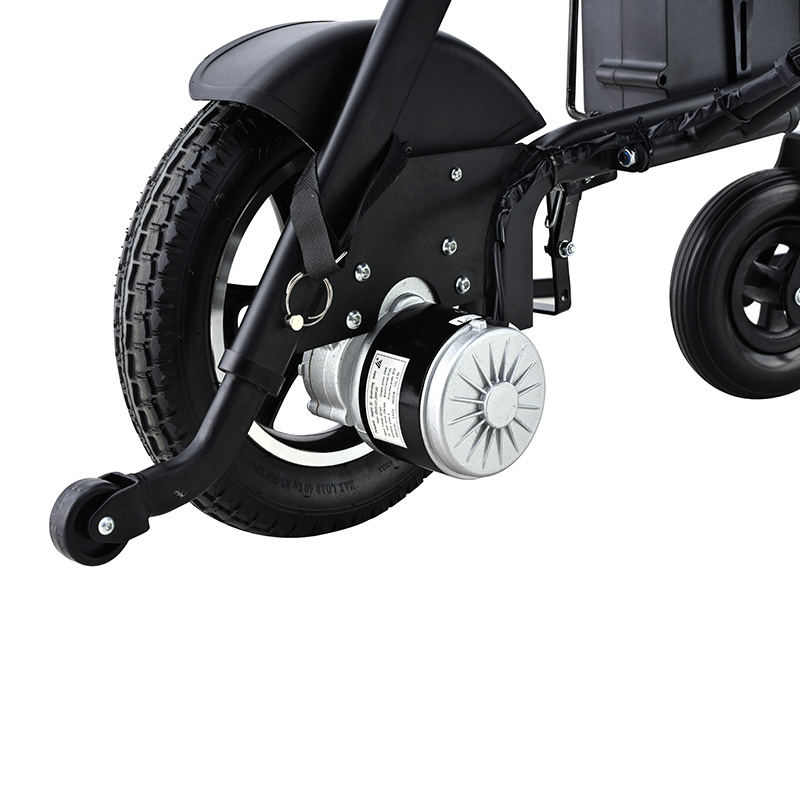 Foldable Power Wheelchair with Comfort Seating and Joystick Control This foldable electric wheelchair features a sturdy steel frame, ergonomic cushioning, and intuitive joystick navigation. Its dimensions serve as a practical reference when measuring your own chair's width and wheelbase for ramp fitting. View Product →
 Write down your own chair's width and wheelbase as well, and add a small margin for the wheels on both sides. That margin is often the difference between a ramp that fits and one that requires constant realignment.
Slope Ratio and Length: The Standard That Decides Everything
The first specification to evaluate is the slope ratio. A 1:12 slope is the benchmark for comfort and safety. A 1:8 slope is the practical upper limit for many power wheelchairs, while anything steeper than 1:6 can strain the motors and make control feel risky.
| Raised Height | Ramp Length at 1:12 | Ramp Length at 1:8 | Slope Angle |
| 10 cm | 1.2 m | 0.8 m | 4.8 degrees / 7.1 degrees |
| 15 cm | 1.8 m | 1.2 m | 4.8 degrees / 7.1 degrees |
| 20 cm | 2.4 m | 1.6 m | 4.8 degrees / 7.1 degrees |
| 25 cm | 3.0 m | 2.0 m | 4.8 degrees / 7.1 degrees |
The table shows that adding just 0.6 m of ramp length can reduce the angle by more than 2 degrees. Always add at least 10 percent extra length beyond the minimum calculation to allow for the wheelchair's approach and a gentle transition.
Material and Construction Differences
Once the slope and space are settled, material choice makes the biggest practical difference. In most home situations, aluminum ramps offer the best overall balance because they resist corrosion, remain relatively light, and still carry a high load. Steel is strong but heavy and can rust over time without protective coating. Rubber ramps are excellent for thresholds and very short rises, but they are not intended for long spans. Fiberglass and composite ramps are weather-resistant but usually cost more.
| Material | Weight Capacity | Weight | Corrosion Resistance | Best Use |
| Aluminum | 300-600 kg | Light | High | Doorways, outdoor steps, long spans |
| Steel | 400-800 kg | Heavy | Low to medium | Permanent outdoor installations |
| Rubber | 100-200 kg | Medium | High | Thresholds and small rises up to 5 cm |
| Fiberglass | 200-400 kg | Light to medium | Very high | Humid or coastal areas |
Think about your own environment before choosing. If the ramp sits outside in a humid climate, aluminum or fiberglass will hold up better than unprotected steel. If the rise is only a threshold, a rubber ramp is often the cleaner answer.
Safety Features That Separate Good Ramps from Barely Working Ones
Surface texture alone can decide whether a power wheelchair enters the house safely on a wet day. Good ramps have a high-traction surface pattern rather than a smooth finish. Side rails or raised edges are also important because they prevent unintended sideways movement when the user turns. Fixing the ramp to the ground is critical: a loose ramp can slide one or two centimeters, which turns a normal transition into a jarring bump.
Consider the approach and departure transitions as well. Small transition plates at the top and a stable bottom edge help the wheelchair wheels roll without catching. Take your time with the top seam, because many home incidents happen not on the slope itself but at the point where the ramp meets the threshold.
Matching Ramp and Power Wheelchair for Real Daily Use
Your power wheelchair and the ramp work as one system. If the ramp is correctly built but the chair has a limited climbing specification, you may still struggle on a 1:8 slope. That is why a mobility device with a clear climbing rating can be an advantage when the ramp surface is not perfectly smooth or when the approach angle is slightly steeper than expected.
heavy-duty four-wheel folding mobility scooter with 12% climbing capacity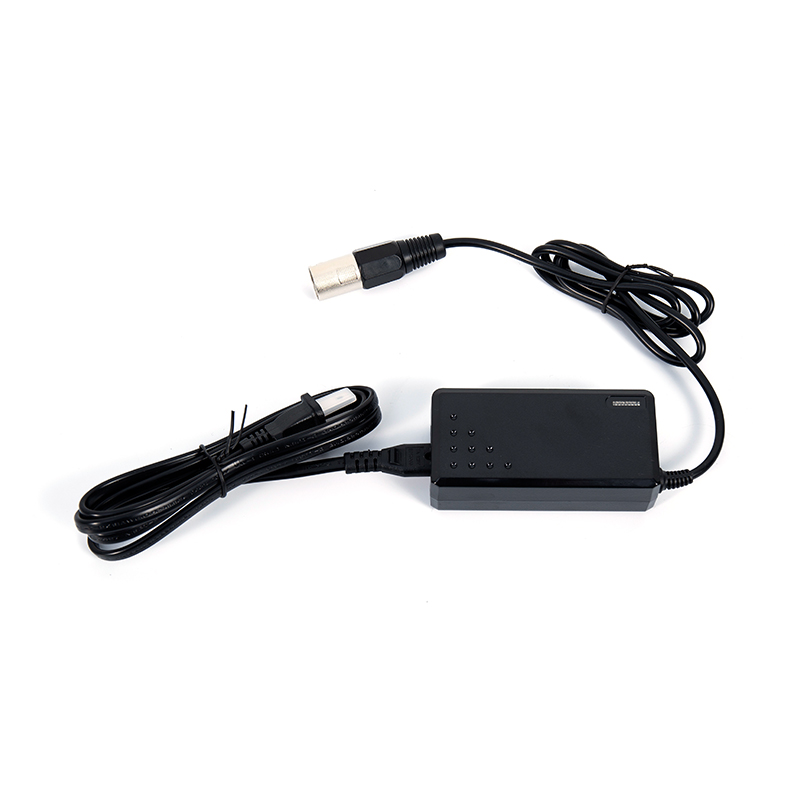 Heavy-Duty 4-Wheel Mobility Scooter with 12-Degree Climbing Ability Built with a durable steel frame and comfortable seating, this scooter handles steep inclines up to 12 degrees. Its rated climbing capacity helps you assess ramp suitability, especially for slopes approaching a 1:8 ratio. View Product →
 A scooter or wheelchair that can handle a 12 percent grade gives you more confidence on the steeper ramps you are likely to encounter at home. This rating can be converted to an angle of roughly 7 degrees, which is close to a 1:8 ratio. Use that as your reference when deciding whether a steeper ramp is acceptable for your daily route.
Frequently Asked Questions
Q1: Can a power wheelchair climb a 1:12 ramp?
Yes, most power wheelchairs can climb a 1:12 ramp, but the motor's rated climbing ability and the combined weight of the user and chair matter. Always check the climbing specification before use.
Q2: Do I need a ramp for a small threshold?
Even a 2 to 5 cm threshold can stop electric wheelchair wheels. For small heights, a rubber threshold ramp is the simplest and often most affordable solution.
Q3: Should a home ramp be permanently fixed or portable?
If the ramp stays in one place, fixing it is safer and more durable. If you need to store it or use it away from home, choose a portable model with a positive locking mechanism.
Q4: How long should the ramp be for a 15 cm step?
Multiply the step height by 12. For a 15 cm step, that gives 1.8 m at a 1:12 ratio. Adding an extra 30 cm for approach and departure is a smart safety margin.
Final Practical Recommendations
Go through this short sequence before ordering: measure the raised height, check the available running length, calculate the slope ratio, verify the ramp material and weight capacity, then confirm the safety features. If any number feels close to the limit, choose a longer ramp rather than a shorter one. The extra 30 or 60 cm makes daily use more relaxed and extends the life of your wheelchair drive system.
When you want tailored guidance for your own doorway, ramp and power wheelchair combination, write to the Heins team and share your measurements. Contact the Heins team for a recommendation that fits your situation.
You should also remember that transporting a device for travel or storage adds its own demands. Read about safely transporting your mobility scooter or power wheelchair to see how a ramp interacts with loading and unloading. Keep the ramp, wheelchair and transportation mindset aligned, and the whole mobility setup becomes easier to live with.
Interessiert an Zusammenarbeit oder Fragen?

-
Die auf dieser Website bereitgestellten Informationen sind ausschließlich für die Nutzung in Ländern und Rechtssystemen außerhalb der Volksrepublik China bestimmt.
-
Büroadresse
Zimmer 315, Gebäude 5, Nr. 45 Songbei-Straße, Suzhou-Freihandelszone, China
-
Fabrikadresse
Nr. 2 Shanyan-Straße, Ortschaft Huzhen, Kreis Jinyun, Stadt Lishui, Provinz Zhejiang, China
-
Mobiltelefon
+86 137 7606 7076
-
E-Mail
taylor.liu@heinsmed.com
Wenn Sie die gesuchte Antwort nicht finden können, chatten Sie mit unserem freundlichen Team.
Anbieter von kundenspezifischen Mobilitätsrollern für ältere Menschen
